
Some golf courses announce themselves with grand entrances, valet parking, and a pro shop that smells like new leather. And then there are places like Binder Park Golf Course in Battle Creek, Michigan, where the announcement comes quietly, in the form of towering oaks closing in around you, a deer stepping out of the tree line to size you up, and the gradual realization that it’s just you, Mother Nature, and that little white ball! No houses. No fences. No subdivisions creeping up to the edge of the rough. Just 600 acres of some of the most pristine old-growth forest, wetlands, and glacially sculpted terrain in all of Southwest Michigan.
That setting did not happen by accident. In the early 1950s, the Charles Binder family, who operated a long-standing local meat and specialty food business in Battle Creek, gifted their nearly 600-acre property to the city with one firm stipulation: the land was to be used strictly for community recreation. Arch Flannery, the city's Recreation Director at the time, envisioned a public golf course that would make the game accessible to everyday citizens. In 1963, Binder Park opened as one of the first 18-hole public courses in Southwest Michigan.
The original 18 holes at Binder Park Golf Course were designed by architect Charles Scott, whose fingerprints are on some of the most respected layouts in the region. The original Preserve and Marsh nines debuted together that year as the founding 18-hole layout. In 1999, the facility expanded to 27 holes with the addition of The Natural nine, along with a state-of-the-art teaching center, a three-hole practice course, a driving range, and dedicated chipping and sand trap areas. The First Tee program now calls Binder Park home, introducing a new generation to the game on the same grounds where Battle Creek residents have been teeing it up for more than six decades.
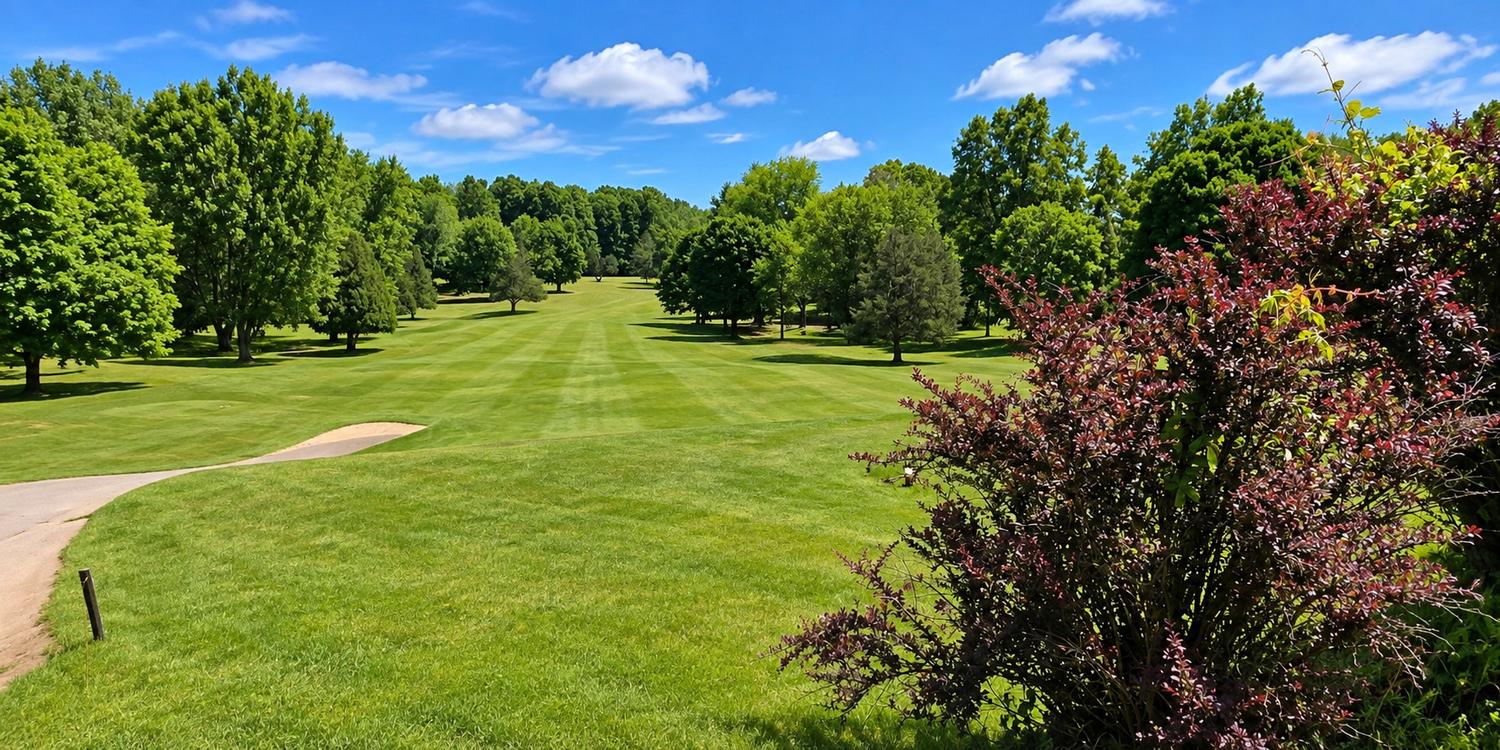
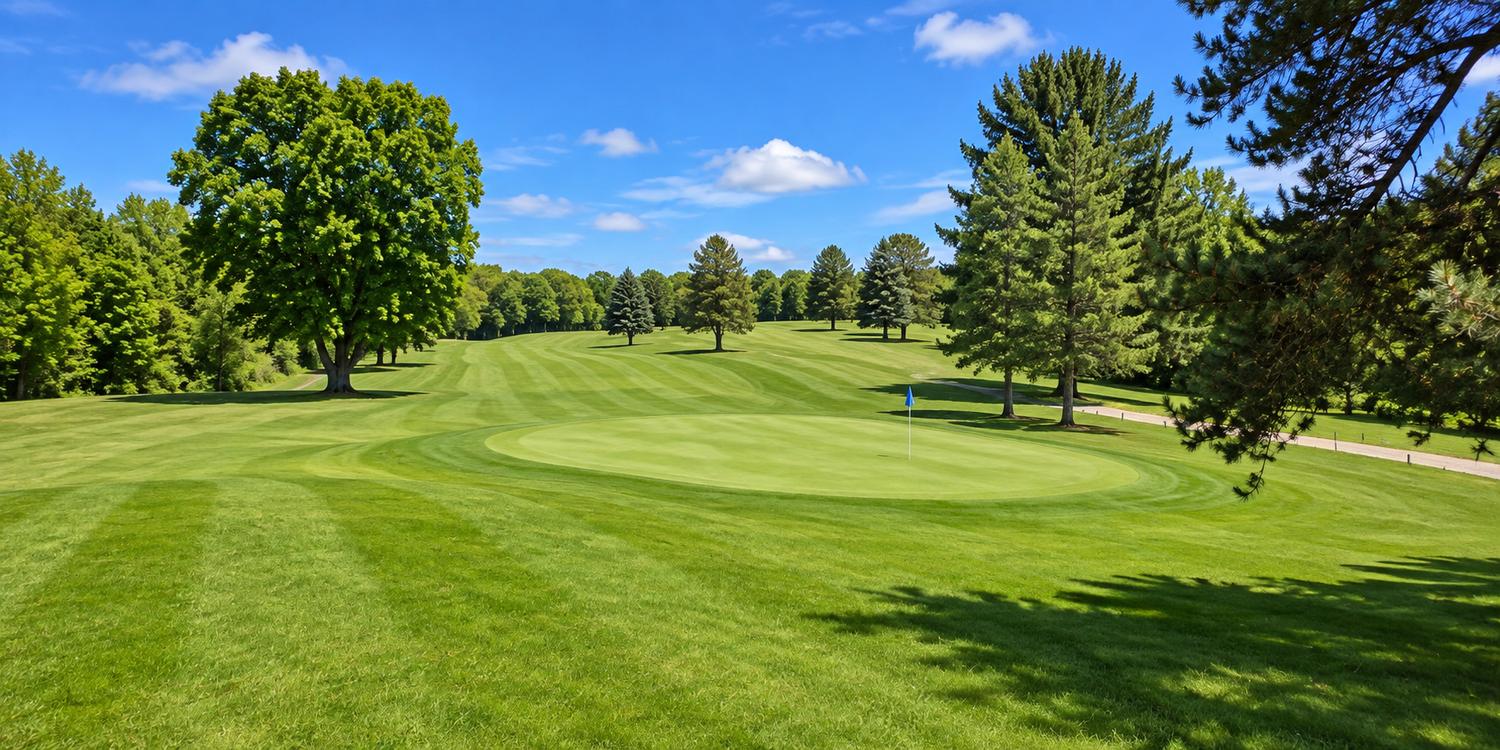
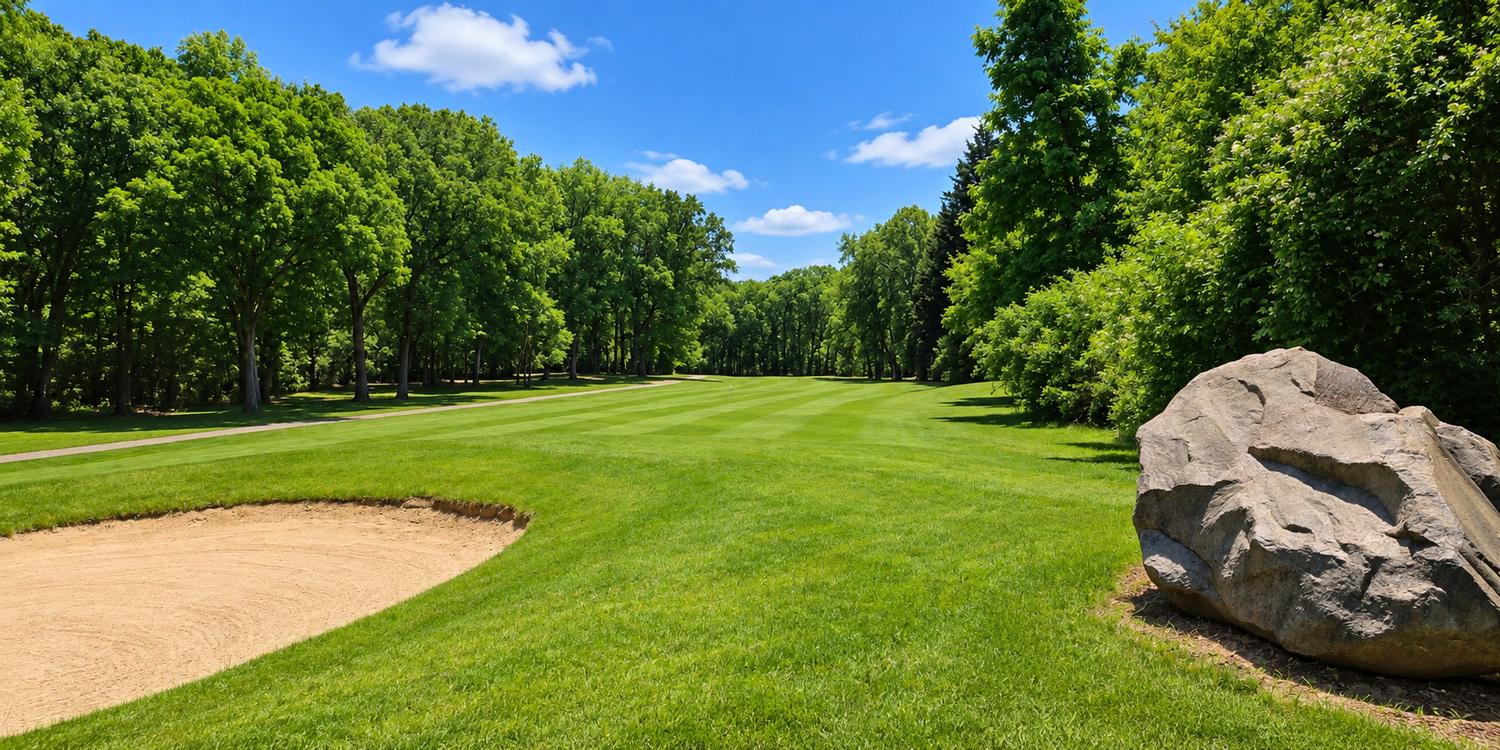
As you play the course, you’ll quickly notice how genuinely peaceful it is. Mature oaks and hardwoods line virtually every fairway, standing like sentinels that have watched generations of golfers try - and fail - to keep it in the short grass. The fairways roll and dip across terrain shaped by ancient glacial deposits, giving each hole a distinct character and ever-changing lies. Several driving holes demand real accuracy with no room to spray the driver. Miss the fairway on the wrong side, and the trees will make your decision for you. The absence of homes on the golf course is not a small thing, either. It creates a stillness and a focus that is increasingly rare in public golf and makes Binder Park feel far more exclusive than its open-to-the-public status would suggest.
The 27 holes are divided into three independent nine-hole layouts, each with its own character and its own set of handicap holes numbered one through nine. The Natural plays to a par of 35 from 2,917 yards on the Blue tees, the Preserve stretches to 3,140 yards from the Blues at par 36, and the Marsh checks in at 3,243 yards from the Blue tees at par 36. All three share the same DNA of tree-lined fairways, rolling terrain, and wetlands that are always closer than they look.
The Natural may be the newest of the three nines, but it quickly established itself as a must-play. The opening hole sets the tone immediately. It is a par 4 that rewards patience over power. Reach for the driver here, and you are asking for trouble, because the wetlands lurk down the left side of the hole, and the farther left your ball drifts, the more water you will find. A fairway wood or long iron puts you in position for the approach, which plays entirely uphill to a green you cannot fully see from the fairway. Take one club more than you think you need. Take two if you have any doubt. The Natural rewards golfers who pay attention.
The fourth hole is a 361-yard par 4 that rewards a particular shot shape. A left-to-right ball flight off the tee maximizes your distance through the fairway corridor, where trees press in from both sides. Find the fairway, and you are left with little more than a pitch shot into a green that is long, narrow, and full of movement. This is a legitimate birdie hole for the player who is willing to commit to the tee shot.
The sixth is one of those holes that makes you smile the moment you step onto the tee. It is a short par 3, playing 141 yards from the Blue tees, but the downhill grade makes it play shorter still. The green is enormous, far wider than it is deep, which means the real challenge is not length but club selection and landing zone. Aim for the correct portion of the green for your pin position. Missing the green leaves you with a chip from ground that falls away quickly.
The Marsh nine opens with a hole that has the feel of a match-play closer rather than an opener. From an elevated tee box, you look down at a short par 4 of just 311 yards from the Blue Tees, with a large bunker guarding the left side of the landing area and trees framing the corridor off the tee. The temptation to drive the green is real, but the bunker has swallowed more than a few ambitious tee shots. The approach plays into a green that is very wide but shallow front to back, which means anything long or short leaves a difficult up-and-down. Take your medicine off the tee, find the fairway, and give yourself a full wedge into that wide green.
Between the three nines, there are enough holes to keep you coming back through every season. The blue skies of a Michigan summer morning, the orange and gold canopy of a fall afternoon, the soft fairways of a May weekend, Binder Park looks good in every light. And because each nine plays as an independent loop with handicap holes running one through nine, there is a freshness to every combination you choose.
Binder Park Golf Course is a public facility in every sense of the word, built on donated land, shaped by a community vision, and maintained with a pride that shows in every mowed fairway and raked bunker. It is the kind of place that reminds you why you took up this game in the first place. To book your tee time and plan your round, visit www.binderparkgolf.com or call (269) 979-8250.